

Learning Across Borders: A Conservation Education Exchange in Rwanda
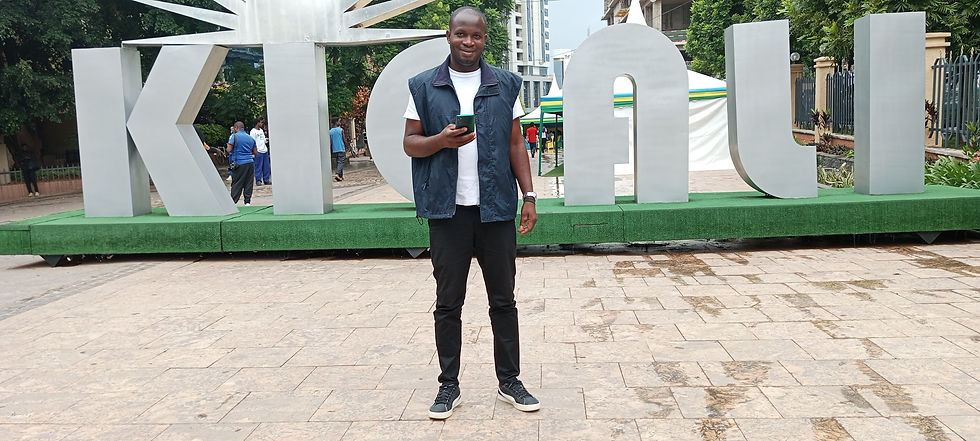
Travelling is often said to be the best teacher, but when you combine travel with a shared passion for the planet, the lessons run even deeper. In mid-February 2026 (15th-20th), I had the incredible opportunity to travel from the coastal shores of Kenya to the rolling hills of Rwanda for a five-day exchange visit that has forever changed how I view environmental education.
Supported by Tusk Trust and organised under the Pan African Conservation Education (PACE) program, my mission was simple: to learn, share, and bring back the best conservation strategies from the Rwanda Wildlife Conservation Association (RWCA) to our work at the Lamu Marine Conservation Trust (LaMCoT).
A Meeting of Minds at Umusambi Village
The journey began at Umusambi Village, a beautifully restored wetland and sanctuary for Grey Crowned Cranes. Surmounted by the peaceful calls of the birds, I joined 14 RWCA mentors and Penny, the PACE Coordinator, for a workshop that challenged us to look beyond just "planting trees."

We dove deep into Conservation Ethics, discussing how we must respect local cultures to truly make an impact. I realised that conservation isn't just about protecting nature; it’s about building trust. We also explored Conservation Photography, learning how a single image can tell a story of hope or urgency that words sometimes fail to capture.
Classroom Without Walls: Seeing Conservation in Action
The real magic happened when we left the workshop and visited Mubuga and Jarama schools. I was blown away by the learner ownership I saw. Students didn't just talk about the environment; they showed us:
Composting: Turning organic waste into "black gold" for their crops.
School Gardens: Seeing flourishing cabbages and onions grown by student hands.
Tippy Taps: Simple, hands-free handwashing stations made from local materials that bridge the gap between hygiene and water conservation.
It was a powerful reminder that you don’t need a massive budget to create meaningful change - you just need creativity and local materials.
Bringing Rwanda Home to Lamu
As I return to the Lamu archipelago, my notebook is full of ideas. My goal is to infuse the "RWCA spirit" into LaMCoT’s programs. This means:
Empowering Mentors: Shifting our school patrons from supervisors to active mentors.
Practical Projects: Bringing the Tippy Tap and composting models to our partner schools in Lamu.
Storytelling: Using photography to document our students' successes and share them with the world.
A Personal Milestone

On a personal note, this trip was a series of firsts for me. It was my first time meeting our coordinator, Penny, in person, and incredibly, my first time travelling outside of Kenya! The warmth of the Rwandan people and the shared dedication of my fellow conservationists made me realise that while our borders may be different, our goal is the same: a sustainable future for Africa.
I want to extend my deepest thanks to PACE, RWCA, and Tusk Trust for making this exchange possible. A special thank you to my team at LaMCoT for their ongoing support.
The lessons from Rwanda are now planted in the soil of Lamu - I can’t wait to watch them grow.
Written by Fondo Jackson,
Conservation Education Officer


I really enjoyed this article because it focuses on the actual learning process behind technical assignments. Instead of only discussing the final submission, it draws attention to preparation and careful work throughout the project. That is something I have started to value more as I have progressed through my own studies. The topic reminded me of my experiences with Solidworks Assignment Help UK, especially when working on assignments where precision matters. I also found New Assignment Help UK worth noting because academic guidance can provide useful direction when coursework instructions are unclear. Overall, this was a thoughtful read with several points that students can relate to.
mình có lần lướt đọc mấy trao đổi trên mạng شيخ روحاني thì thấy nhắc nên cũng tò mò mở ra xem thử cho biết. mình không tìm hiểu sâu chỉ xem qua trong thời gian ngắn để quan sát bố cục cách sắp xếp جلب الحبيب các mục và trình bày nội جلب الحبيب dung tổng thể. cảm giác là các phần được trình bày khá gọn, các hurentest berlin mục rõ ràng Huren Berlin nên đọc lướt cũng không bị rối với mình như vậy là đủ để nắm tin cơ bản rồi. جلب الحبيب
👍
Really enjoyed reading this — the exchange in Rwanda is a great example of how much we can learn when people share ideas and practical experiences across borders. I especially liked the focus on student-led projects like composting, school gardens, and tippy taps. With so much to learn and manage alongside studies, resources such as Bookkeeping Assignment Help can also give students some useful academic support. It’s inspiring to see how the lessons from Rwanda are being taken back to Lamu and turned into practical action.
I enjoyed reading about the conservation education exchange in Rwanda, particularly the emphasis on learning through collaboration and sharing experiences across different cultures rather than simply observing from a distance. It’s encouraging to see how projects like this help participants build a broader understanding of environmental conservation while also forming meaningful connections with local communities. The article also reminded me that learning can happen in many different settings, from field experiences like these to completing Online Assignments, where exploring real-world examples often makes the subject feel much more relevant. I’m curious whether there was one particular interaction or conservation activity during the exchange that participants continued talking about after returning home, because those memorable moments often have the greatest long-term…
The post about the conservation education exchange in Rwanda was inspiring because it showed how people from different countries can learn together and share ideas to protect nature. I remember joining an environmental club at school and enjoying hearing different views on conservation. During that busy semester, I used write my management assignment when I was struggling with multiple deadlines and projects. The post reminded me that learning across borders can create stronger solutions for our planet.